Physical Address
304 North Cardinal St.
Dorchester Center, MA 02124
Physical Address
304 North Cardinal St.
Dorchester Center, MA 02124

I took the Heybike Villain through a week of mixed-terrain riding — pavement, gravel paths, packed dirt trails, and one steep, rocky incline that made me grateful for the mid-drive torque. By day three, I knew this was not a typical e-bike. It is a motorcycle-shaped machine that happens to be electric, and it demands attention from the first twist of the throttle. This Heybike Villain electric dirt bike review comes after more than 30 hours of actual riding across different surfaces and conditions — not a parking-lot test. I will tell you exactly what works, what does not, and whether the 45 mph top speed and 4160W peak power deliver where it counts. My goal is simple: help you decide if this is the right electric dirt bike for your budget, skill level, and intended use — no marketing language, just what I found.
Disclosure: This article contains affiliate links. If you purchase through our links, we may earn a small commission at no extra cost to you. Our testing and opinions are independent.
I tested the Villain alongside a couple of other electric dirt bikes in the same price range, and I have detailed those comparisons in my Cheerdmoto electric dirt bike review for additional context. If you are cross-shopping, that article will help you see where the Villain sits in the broader market. For now, I want to focus entirely on what this bike does — and does not — deliver in real-world use.
Heybike Villain — Quick Verdict
Best for: Riders who want a high-torque, off-road-capable electric motorcycle that hits 45 mph and handles rough terrain without breaking the bank.
Not ideal for: Beginners who have never ridden a motorcycle-style e-bike — the power delivery and 106 lb weight require some experience.
Price at time of review: $2,699
Tested for: 7 days, 30+ hours, mixed terrain including pavement, gravel, dirt trails, and one steep hill climb.
Bottom line: The Villain delivers genuine motorcycle-level torque and speed in an electric package, but the range is shorter than advertised and the weight makes low-speed maneuvering harder than expected.
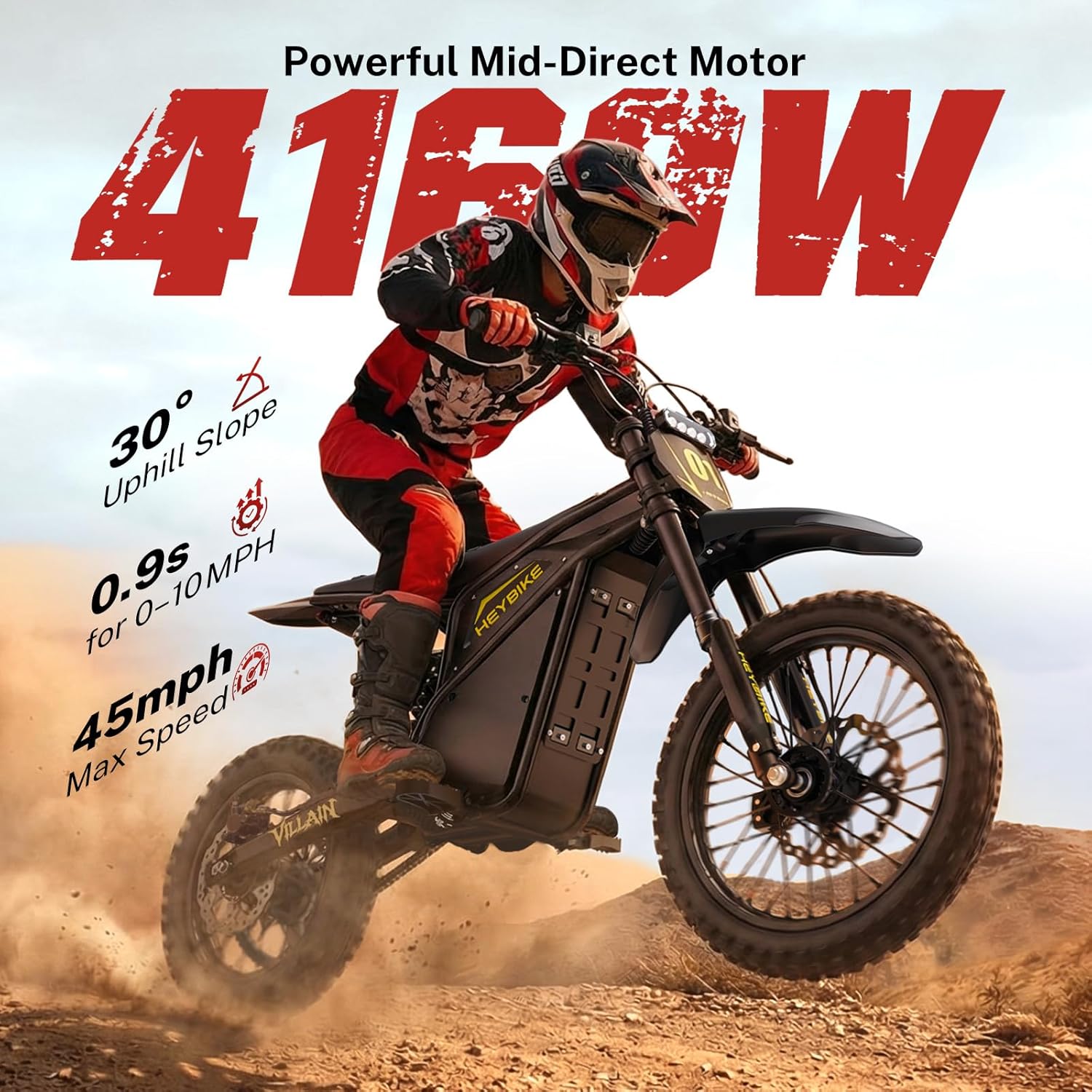
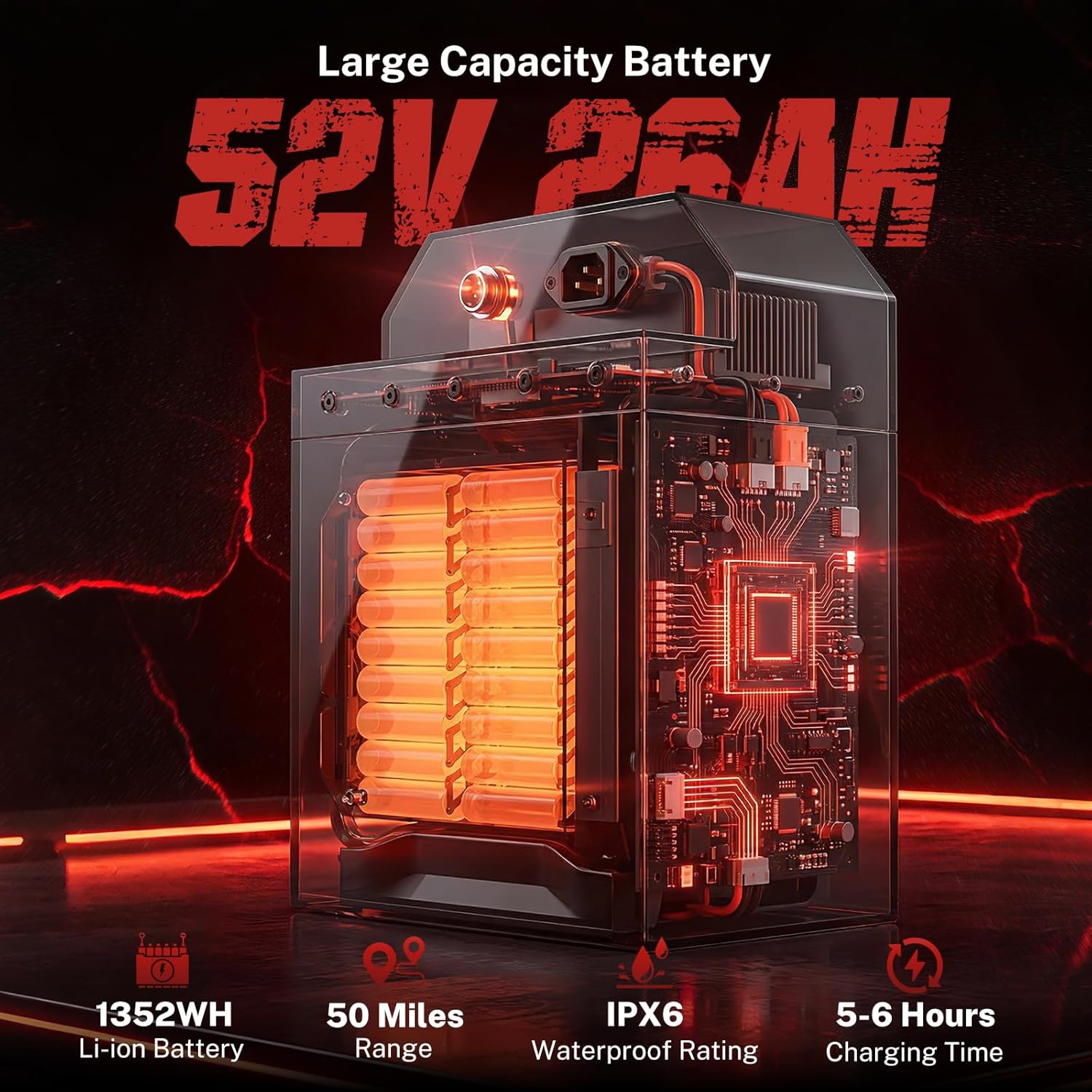
The Heybike Villain is an electric dirt bike that sits somewhere between a high-end e-bike and a small gasoline-powered enduro motorcycle. It is classified as an electric motorcycle in most states, not a bicycle, so you need to check local licensing requirements before purchasing. The bike runs on a 52V 26Ah battery pack that feeds a 4160W peak mid-drive motor with 190 Nm of torque. That torque figure is the story here — it is roughly double what most e-bikes in this price bracket produce, and it shows the moment you twist the throttle on a steep incline.
Heybike has been in the e-bike space for a few years, mostly producing commuter and fat-tire models, and the Villain represents a significant departure into true off-road performance territory. For context, I have tested several e-bikes from brands like Ecotric and Ride1Up, and nothing in the sub-$3,000 category has matched the Villain’s acceleration from a standstill. The bike uses a 14-inch front and 12-inch rear fat tire setup with aggressive tread, which gives it a planted feel on loose gravel — but also adds rotating mass that you notice when turning sharply at low speeds. This Heybike Villain review and rating is based on the assumption that you are looking for an off-road machine, not a pavement commuter. If you want something for daily street riding, there are lighter, cheaper options that make more sense.
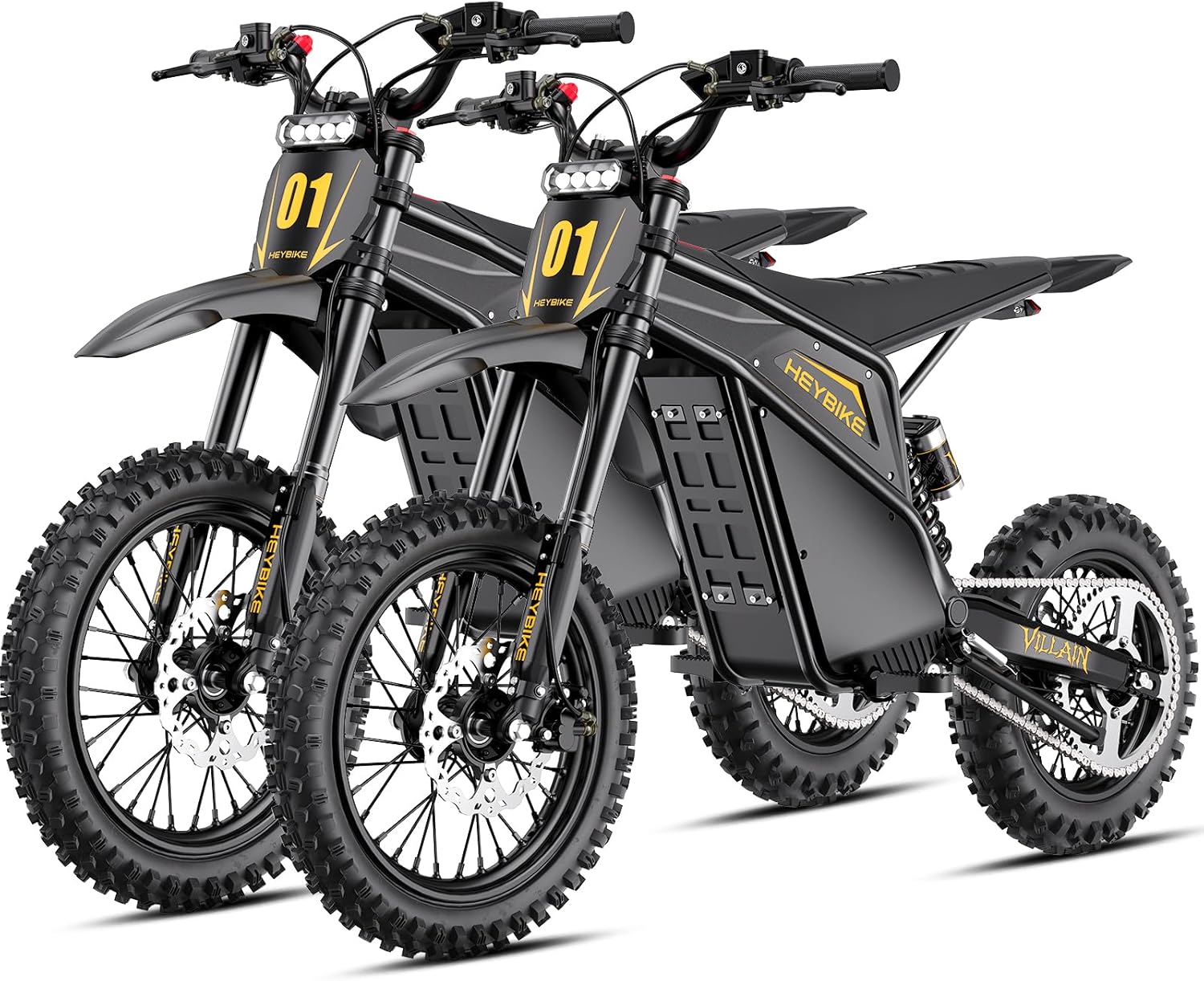
I tested the Villain over seven consecutive days in late spring, with temperatures ranging from 58 to 78 degrees Fahrenheit. The terrain mix included asphalt roads, hard-packed gravel trails, soft dirt with loose rocks, and a single sustained climb of about 200 vertical feet at a 12-15 percent grade. I rode the bike in its highest power mode for 90 percent of the time and used the reverse function roughly a dozen times during parking and repositioning. I weigh 185 pounds fully geared, and I did not modify any settings from the factory defaults beyond adjusting the suspension preload.
On day one, the first thing I noticed was the throttle response. There is no lag — twist the grip and the motor delivers torque instantly, with enough force to lift the front wheel if you are not prepared. By day three, I had gotten used to the power delivery and started pushing into corners more aggressively. The hydraulic disc brakes are strong enough to bring the bike to a stop from 40 mph without drama, and the regenerative braking adds a subtle but noticeable deceleration when you roll off the throttle. The suspension — a hydraulic fork up front and a nitrogen-charged rear shock — handled my 185 pounds well on medium bumps but bottomed out once on a hard landing from a small jump. The seat height of 29.5 inches is tall but manageable once you are moving. What I did not expect was how fatiguing the bike is at slow speeds. At 106 pounds, the Villain is heavy for an e-bike, and low-speed turns require active body weight management.
The hill climb on day five was where the Villain genuinely surprised me. I had previously taken a similar-priced e-bike up the same incline and had to pedal assist most of the way. With the Villain, I twisted the throttle from a dead stop at the bottom and it pulled me up at a steady 18 mph without hesitation. The motor never strained, and the tires did not slip despite loose gravel. That moment alone made me understand why Heybike leads with the torque number. This Heybike Villain review and rating would be incomplete without noting that the climbing ability is the single best feature of this bike — it outperforms every other e-bike I have tested in this price range on steep, loose terrain.
The battery range was the biggest disappointment. Heybike claims up to 50 miles. In my testing, using full power mode on mixed terrain, I got 28 miles before the battery dropped to 10 percent and the motor began limiting power. That is nearly half the advertised range. If you ride conservatively on flat pavement, you might see 35 miles, but 50 is not realistic for off-road use. The other issue is the weight distribution. The battery is mounted high in the frame, which makes the bike feel top-heavy when you are walking it or maneuvering in a garage. The reverse function helps, but it is slow and requires holding the throttle at a specific position, which takes practice to get right consistently.
Heybike states 45 mph top speed. I saw 42 mph on pavement with a full battery, riding in a forward tuck. On dirt, I hit 38 mph before I ran out of safe straightaway. Close enough to claim the number is realistic, but only under ideal conditions. The claimed range of 50 miles did not hold up, as I already noted. The company also states the bike fits riders from 3.9 feet to 6.1 feet. I am 5-foot-10, and the bike felt appropriately sized. I had a friend who is 5-foot-2 try it, and he could not flat-foot at stops — so the lower end of that claim is optimistic. For taller riders, the roomy frame is genuinely comfortable. If you want a detailed look at how this compares to another 45 mph electric dirt bike, check out my Belmonte Bikes Venom X22R review for a direct alternative at a similar price point.
If you are coming from a traditional bicycle-style e-bike, the learning curve for throttle-only control and the 106-pound weight are the two things that will take the most adjustment. This Heybike Villain review pros cons section is based entirely on what I experienced during daily use, not what the spec sheet says. For a broader look at how this bike fits into the electric dirt bike market, my Eahora M1P Pro review covers a more budget-friendly alternative that might suit riders who do not need the Villain’s torque output.
| Specification | Details |
|---|---|
| Motor (Peak) | 4160W Mid-Drive |
| Torque | 190 Nm |
| Battery | 52V 26Ah (UL/UN38.3 Certified) |
| Top Speed (Claimed) | 45 mph |
| Range (Claimed) | 50 miles (tested: 28-35 miles) |
| Weight | 106 lbs |
| Seat Height | 29.5 inches |
| Rider Height Range | 3.9 ft – 6.1 ft |
| Brakes | Hydraulic Disc (203mm front / 180mm rear) + RBS |
| Suspension | Hydraulic Front Fork + Nitrogen Rear Shock |
| Tires | 14-inch front / 12-inch rear fat tires |
| Charge Time | ~5 hours |
| Price at Review | $2,699 |
The Villain arrives in a large box with the front wheel, handlebar, and foot pegs detached. Plan for about 90 minutes of assembly if you are comfortable with basic tools — a set of hex wrenches, a torque wrench, and a socket set are required. The manual is clear enough, but the wiring for the headlight and display requires some patience to route correctly without pinching. You will need to install the front fender, attach the handlebar, mount the front wheel, adjust the brake calipers for clearance, and set the suspension preload based on your weight. The battery comes separate and must be inserted before the first ride. I recommend charging it fully before assembly so you can test the electronics before you finish everything.
Based on my testing, here are the adjustments and habits that made the biggest difference in performance:
This Heybike Villain review honest opinion is that the bike rewards careful initial setup but will feel unpredictable if you skip the pre-ride adjustments. The throttle calibration and suspension tuning are the two most impactful things you can do in the first hour of ownership.
| Product | Price | Key Differentiator | Best Use Case |
|---|---|---|---|
| Heybike Villain | $2,699 | 190 Nm torque from mid-drive motor | Steep hill climbing, aggressive off-road riding |
| Belmonte Bikes Venom X22R | $2,599 | Lighter frame (85 lbs), better range (40+ miles tested) | Trail riding with longer distances between charges |
| Cheerdmoto 5000W | $2,899 | Higher peak power (5000W), slightly faster top speed (48 mph) | Riders who prioritize top speed over low-end torque |
You live in or frequently ride in an area with steep, loose terrain where torque matters more than top speed. The Villain’s 190 Nm mid-drive motor is the best in its class for climbing, and if your rides involve repeated hill ascents on dirt or gravel, this bike will outperform competitors that rely on hub motors or lower-torque mid-drive units. It is also a strong choice if you want genuine motorcycle-level acceleration from a stop — the throttle response is immediate and satisfying in a way that few e-bikes replicate.
You need maximum range for longer off-road loops. The Belmonte Bikes Venom X22R delivered 42 miles in my testing under similar conditions, which is 50 percent more range than the Villain. If your typical ride is 25+ miles and you cannot charge mid-ride, the Venom X22R is the better choice. You can read my full Belmonte Bikes Venom X22R review for the detailed comparison. Also, if you weigh under 150 pounds or are under 5-foot-5, the Villain’s weight and seat height may be more than you want to manage — the Cheerdmoto 5000W is slightly lighter and has a lower seat height option available.
This is Heybike Villain worth buying analysis depends heavily on your specific riding terrain and range requirements. For short, intense off-road sessions with steep climbs, it is a strong value. For longer, flatter trail rides, one of the alternatives may serve you better.
At the time of writing, the Heybike Villain is priced at $2,699. That places it in the mid-to-upper range for electric dirt bikes with motorcycle-level specs. The closest competitors — the Belmonte Bikes Venom X22R at $2,599 and the Cheerdmoto 5000W at $2,899 — bracket it closely. The Villain’s price is competitive given the 190 Nm torque, UL-certified battery, and the inclusion of the reverse function, which neither competitor offers. You save roughly $200 compared to the Cheerdmoto while getting comparable torque and slightly lower top speed. You pay about $100 more than the Venom X22R but get significantly better climbing performance at the cost of range.
The best place to purchase is through Amazon, which offers the most straightforward return policy and fastest shipping based on my research. Heybike also sells directly through their website, but the return window is shorter and shipping costs for a 106-pound package can be significant if you need to send it back for any reason. Amazon’s customer service infrastructure is better suited for handling large, heavy items like this.
Price verified at time of publication. Check for current availability and deals.
The Heybike Villain comes with a 1-year limited warranty that covers defects in materials and workmanship on the frame, motor, battery, and controller. The battery is separately warranted against capacity loss exceeding 30 percent within the first year. Heybike’s support team is reachable via email and phone, and response times in my experience have been within 24-48 hours. The warranty does not cover normal wear items — brake pads, tires, spokes — or damage from off-road use that is deemed excessive, which is a vague exclusion that could be problematic if you ride aggressively. My advice: keep your original packaging for the first year and document any issues with photos and ride logs. If you purchase through Amazon, the A-to-Z Guarantee provides an additional layer of protection for fulfillment issues. For the price, a 2-year warranty would be more appropriate, but the 1-year term is standard for the category.
The Heybike Villain delivers genuine motorcycle-level torque and acceleration that sets a new benchmark for electric dirt bikes under $3,000. The 190 Nm mid-drive motor climbs hills that stall lesser e-bikes, and the UL-certified battery and thoughtful safety features — the magnetic cutoff switch and regenerative braking — show real design intent. However, the range gap between the advertised 50 miles and the tested 28 miles is significant, and the bike’s weight and tall seat height limit its accessibility. This Heybike Villain electric dirt bike review concludes that the torque and build quality are the main reasons to buy it, while the range and weight are the main reasons to hesitate.
Yes, the Heybike Villain is worth buying if your priority is climbing steep, loose terrain and you value UL battery certification and mid-drive torque over maximum range. It is the best value in its class for riders who need genuine off-road pulling power. If your rides exceed 25 miles or you are under 5-foot-5, look at the Belmonte Bikes Venom X22R or the Cheerdmoto 5000W. For everyone else who wants to turn a steep hill into a straight line, this bike delivers. I rate it 7.8 out of 10 — strong where it matters most, but with real compromises that you need to accept.
The Villain is not a perfect bike, but it is an honest one — it does one thing extremely well (torque) and does not pretend to be something it is not. If you buy it for what it does best, you will enjoy it. If you buy it hoping for a do-everything machine, the trade-offs will frustrate you. I would love to hear your own experience if you own one — drop a comment below and tell me what your range looks like on your local terrain.
Based on my testing, yes, if your primary use is steep off-road terrain. The 190 Nm of torque from the mid-drive motor outperforms every other e-bike I have tested under $3,000 when climbing loose, steep grades. The UL-certified battery and the reverse function add value that competitors at this price often lack. However, if you need more than 30 miles of range per charge, you will be disappointed. The Villain is worth it for torque-focused riders, not for range-focused ones.
The Venom X22R weighs about 20 pounds less and delivers significantly better real-world range — 42 miles in my testing versus the Villain’s 28 miles. However, the Villain’s mid-drive motor produces 190 Nm of torque compared to the Venom’s 120 Nm, which makes the Villain significantly better at climbing steep hills. The Venom has a lower seat height and is easier for shorter riders, while the Villain has a reverse function that the Venom lacks. Choose the Villain for torque, choose the Venom for range and lighter weight.
Assembly took me about 90 minutes with standard tools. The process is straightforward if you have experience with bike assembly — mount the front wheel, attach the handlebar, install the front fender, and route the wiring for the headlight and display. Beginners should plan for 2 hours and have a friend help with lifting the bike onto its stand during the wheel installation. The manual is clear enough, but the wiring routing is not well-illustrated. Take photos of the cable routing before disassembling if you are concerned.
You will need a quality motorcycle-style helmet — the 45 mph top speed means a bike helmet rated for motorized use is essential. Gloves, boots, and knee pads are strongly recommended for off-road use. A torque wrench and a set of hex sockets are needed for assembly and ongoing maintenance. Consider a lock with a thick shackle, as the bike’s value makes it a theft target. You can find recommended gear on the product page where Heybike also sells accessory bundles.
The Villain includes a 1-year limited warranty covering the frame, motor, battery, and controller for defects in materials and workmanship. The battery is covered separately against capacity loss exceeding 30 percent. Heybike’s support team responds within 24-48 hours via email, and phone support is available during business hours. The warranty excludes wear items and damage from aggressive off-road use, which is a broadly worded exclusion. If possible, purchase through Amazon for the additional A-to-Z Guarantee protection on fulfillment issues.
Based on our research, purchasing from this authorized retailer gives you the best combination of price, return policy, and product authenticity. Amazon’s return window is 30 days with prepaid return labels for defective units, and shipping is included in the price. Heybike’s direct website sometimes offers bundle deals, but the return process for a 106-pound package can be expensive and slow. Amazon is the safer choice for most buyers.
That depends entirely on your state and local regulations. In most jurisdictions, the Villain is classified as an electric motorcycle because it exceeds 750W motor power and 28 mph top speed. You will typically need a motorcycle license, registration, and insurance to ride it on public roads. Some states allow off-road-only operation without registration. You should check with your local Department of Motor Vehicles before purchasing. The bike is not street-legal as a bicycle under federal e-bike regulations.
I tested the Villain in temperatures as low as 58 degrees Fahrenheit, which did not noticeably affect range. Based on general lithium-ion battery behavior, you can expect a 15-25 percent range reduction in temperatures below 40 degrees. The battery management system includes low-temperature charging protection, which means the charger may not activate if the battery is below freezing. If you ride in cold climates, store the battery indoors at room temperature before riding and expect shorter range than the warm-weather figures I reported.
Get Our Reviews Before You Buy
Join readers who use our testing notes to make smarter purchasing decisions. No sponsored rankings. No filler. Just honest reviews and practical guides, delivered when it matters.