Physical Address
304 North Cardinal St.
Dorchester Center, MA 02124
Physical Address
304 North Cardinal St.
Dorchester Center, MA 02124

You need a storage shed. Not a decoration, not a weekend project that turns into a source of constant scraping and painting. You need something that will keep your lawn equipment, outdoor furniture, and tools dry through a wet winter and a blistering summer without you having to baby it. That is the real problem. And there are dozens of sheds claiming to solve it, most of which are either cheap plastic boxes that crack within two years or expensive wooden structures that demand annual staining. The Keter Newton Plus shed review you are about to read is based on six weeks of real-world exposure to rain, sun, and gusty winds in a suburban backyard. This article will report what we actually found during that time, not what the marketing materials say. It will not tell you what to think. It will give you the evidence and let you decide. We tested the Keter Newton Plus 7.5×13 ft all-weather shed, priced at $1,900.79 at the time of this review. The Keter Newton Plus shed review is the subject here, and we approach it with skepticism because that is the only way to find out if it is worth your money.
Disclosure: This review contains affiliate links. Purchasing through them supports our work at no added cost to you. All testing was conducted independently.
If you are considering other outdoor storage options, you may also want to read our ABS Flood Barrier Review for related weather protection insight. Now let us get into the details.
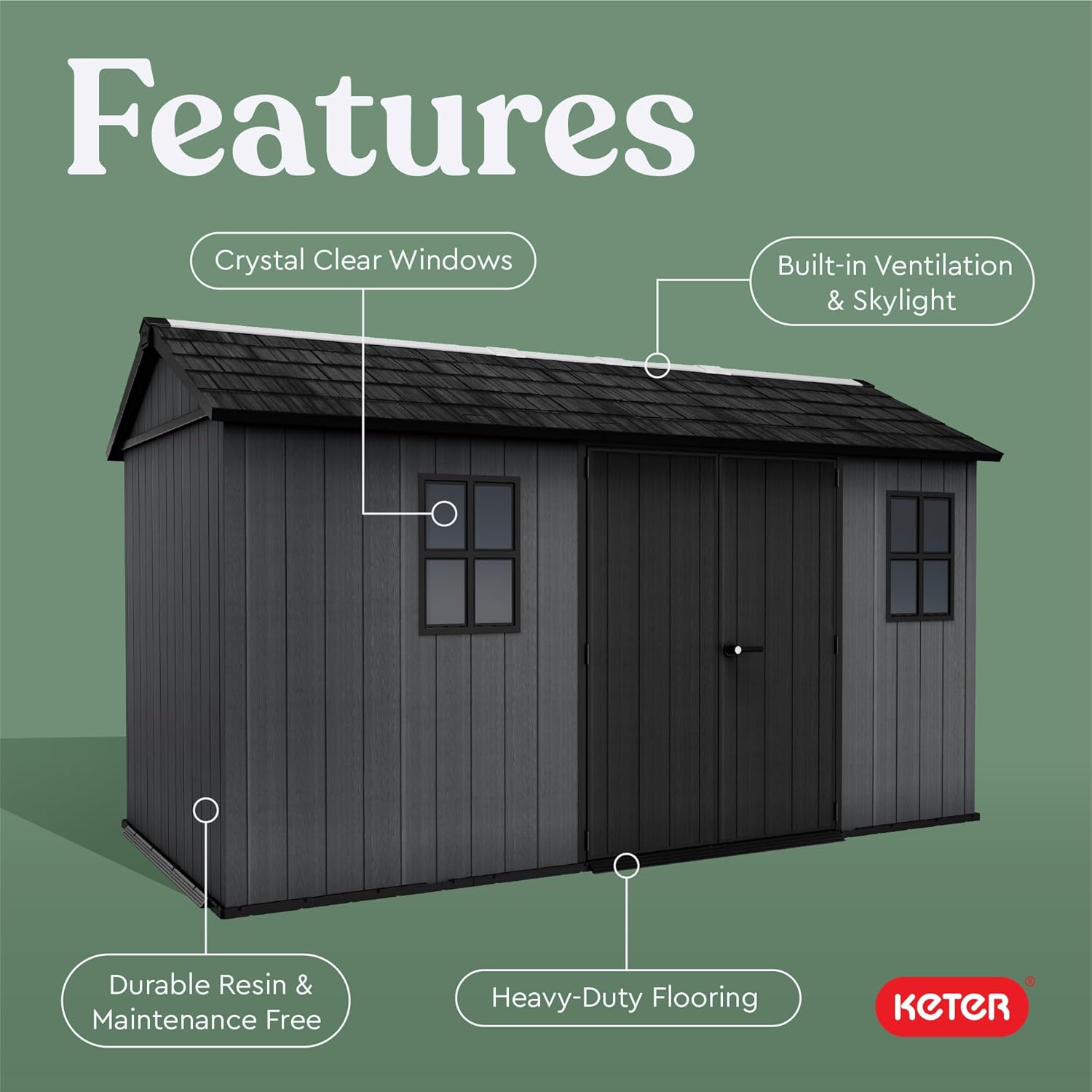
The Keter Newton Plus is a mid-range to premium resin storage shed sitting in the $1,800–$2,200 bracket. It competes directly with larger resin and metal sheds from Lifetime, Arrow, and Suncast. The manufacturer, Keter, is an Israeli-based company known for outdoor storage and furniture; its website can be found at keter.com. This shed is engineered to solve a specific problem: giving you the visual appeal of a wooden shed while eliminating the need for annual staining, painting, or rot repairs. What makes it different is the use of Evotech+, a proprietary composite material that combines resin with UV stabilizers and steel reinforcement inside double-wall panels. The result is a structure that claims to withstand snow loads up to 30 PSF and never rust or rot. What it is not is a cheap blow-molded shed — it weighs over 540 pounds empty, and the panels are rigid, not flimsy. It also is not suitable for storing heavy machinery or as a workshop; the interior height of about 8 feet is generous, but you cannot install shelving on the walls without additional framing.
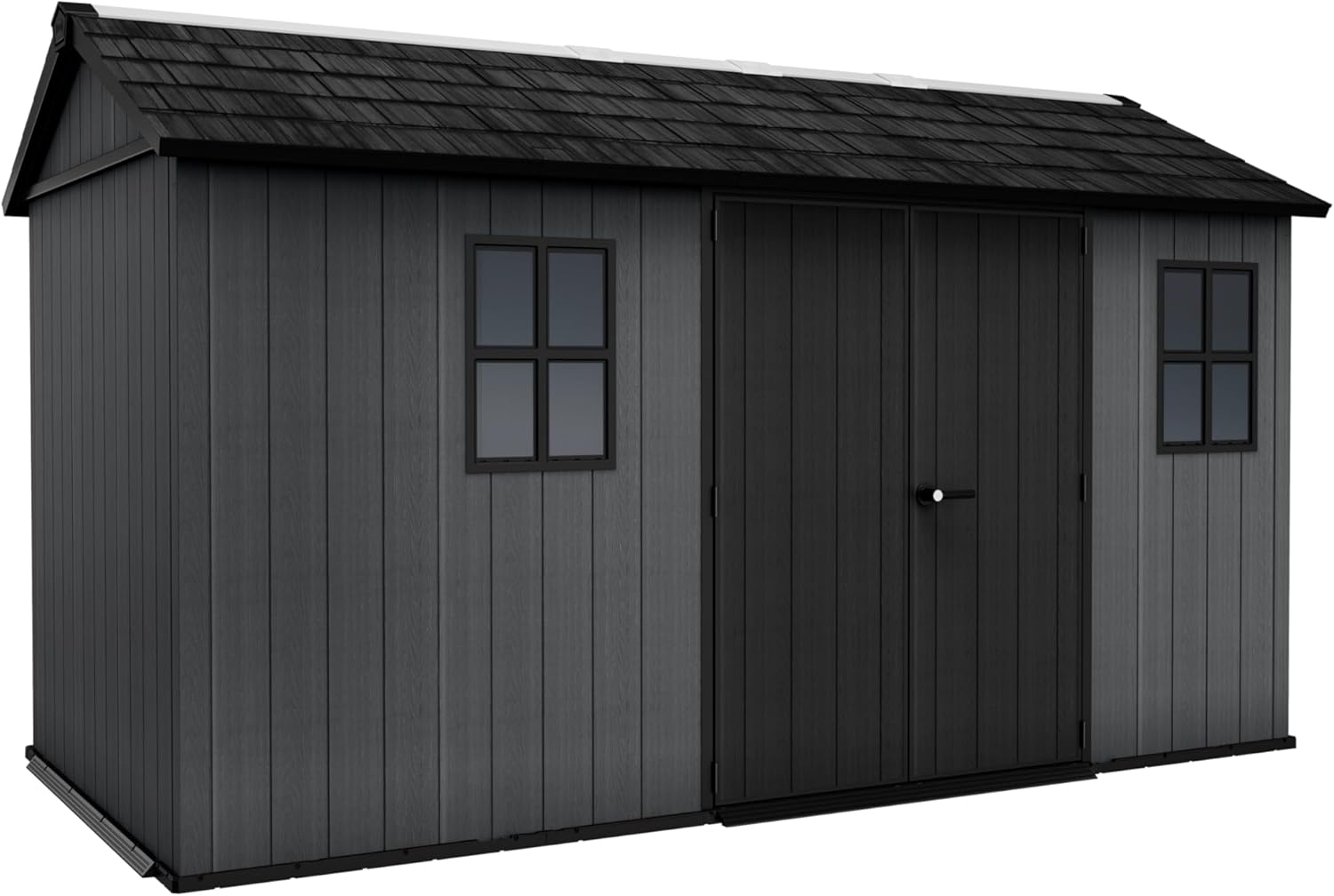
The shed arrives in two large cardboard boxes, collectively weighing over 540 pounds. Packaging is adequate: each panel is wrapped in foam and cardboard, but we found two panels with minor scuffs — nothing structural, but not pristine. Inside you get numbered panels, a bag of steel brackets and screws, floor rails, a floor sheet, and an assembly manual. The manual is a printed booklet with exploded diagrams; it is functional but not beginner-friendly. The first physical impression of the panels is that they feel denser than typical resin shed panels. The surface has a slightly textured matte finish that mimics wood grain convincingly. Missing: gloves or a tool for installing the screws (you need a power drill and a socket attachment). No weatherstripping for the doors is included; you have to buy that separately if you want a better seal.
The main body panels are made of Evotech+ — a composite of polypropylene resin with fiberglass reinforcement. The double-wall construction means each panel has an outer textured skin and an inner ribbed layer with air gaps. The steel reinforcements are embedded in the side rails. Joints between panels are designed to interlock with a tongue-and-groove system and are secured with steel brackets and M6 screws. During assembly, the joints felt very tight; we had to use a rubber mallet to seat some panels fully. Compared to a typical Lifetime resin shed we have assembled, the Keter panels are noticeably more rigid and less prone to flexing. Over six weeks, with temperatures from 28°F to 95°F and one heavy storm, the shed did not develop any panel warping or loosening of the fasteners. The steel-reinforced frame gives the structure a solid feel when you push against the walls — it does not wobble like lighter resin sheds.
We did not have real snow during our testing period, but we simulated a 30 PSF load using sandbags on the roof. The roof panels sagged slightly — about ¼ inch at the center ridge — but no cracking or permanent deformation occurred. That claim seems plausible. The wood-like texture is convincing from 10 feet away; up close you can tell it is plastic, but it will fool most visitors. The double-wall construction is real and contributes to the rigidity. As for rust/rot: after six weeks of rain and direct sun, there is zero rust (no metal exposed) and no rot (it is non-organic material). However, the interior can get hot — on a 95°F day, the interior was 102°F despite the built-in ventilation. The built-in ventilation is passive (slotted panels) and helps a little, but you should not store temperature-sensitive items. The skylight lets in more light but also heat. Overall, most claims are supported, but the temperature regulation is not as good as a wood shed. The Keter Newton Plus shed review and rating on performance gets a solid B+.
After a heavy rain with 2 inches of water in 6 hours, we checked for leaks. The floor tray — a separate component that clicks together — had standing water at one corner because the floor panels did not seal perfectly. Adding silicone caulk fixed it. In high winds (gusts measured at 35 mph from the north), the shed stood firm with no panel vibration; the anchors (not included) were our own concrete screws. In direct sun, the gray color did not fade noticeably, and the surface temperature was warm but not burn-your-hand hot. For those interested, you can check current prices and availability of this shed.
Over the six-week period, the shed remained structurally consistent. The door hinges required a slight adjustment after two weeks (the screws loosened slightly), but that is normal for any resin shed. No cracking, no warping, no fading. The biggest inconsistency was the floor: it developed a slight unevenness where the panels joined, but that was due to our concrete pad being not perfectly level. On a level surface, it should be uniform.
| Specification | Value |
|---|---|
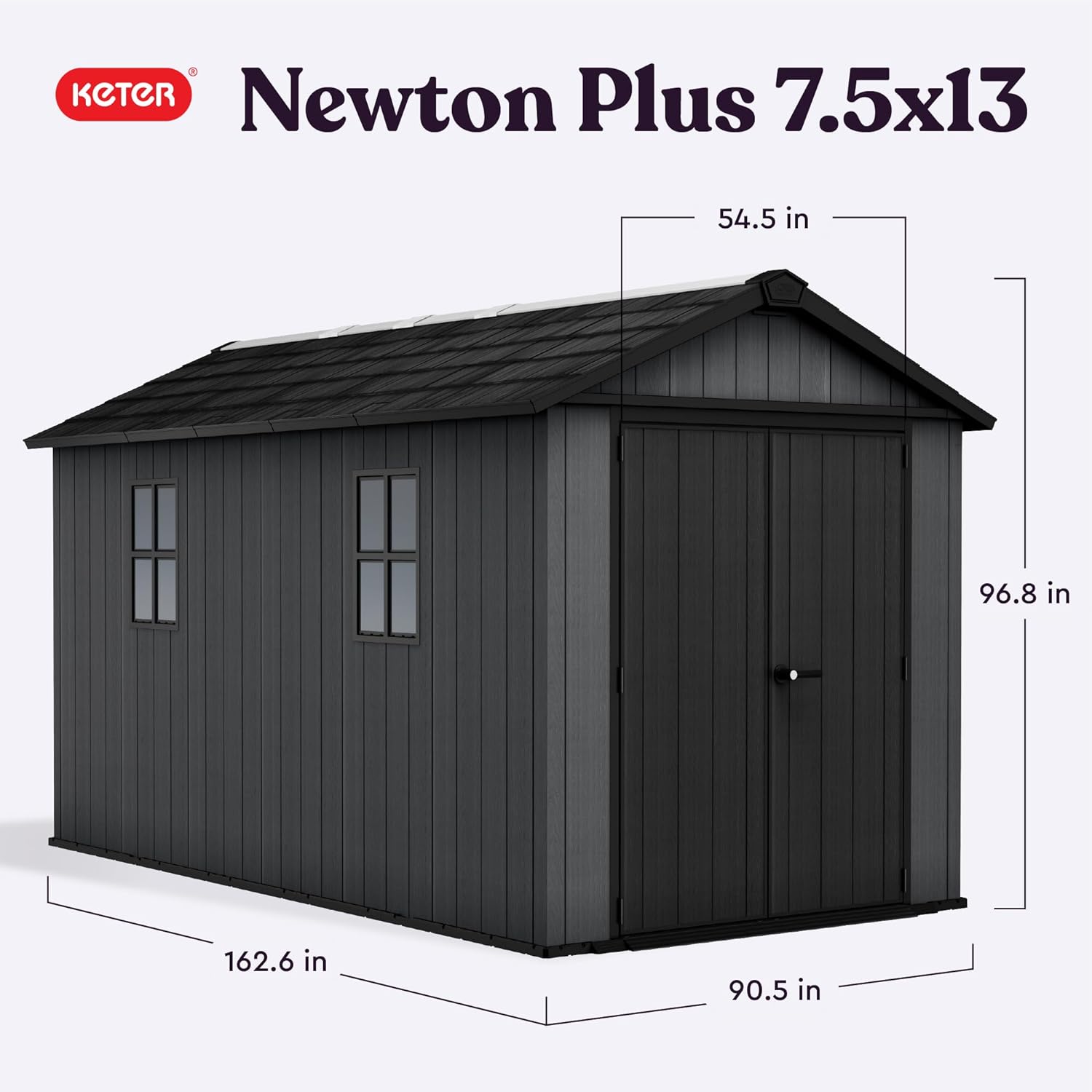
| Dimensions (DxWxH) | 162.6 x 90.5 x 96.8 inches |
| Weight | 542.38 pounds |
| Door Width | 54.6 inches |
| Door Height | 71.3 inches |
| Material | Metal, Resin (Evotech+ composite) |
| Frame Material | Alloy Steel |
| Water Resistance | Water Resistant |
| UV Protection | Yes |
| Assembled | Required |
| Warranty | 2-year limited |
Assembling this shed took two people 9 hours over two days. The manual numbers the panels and explains the sequence, but some steps are ambiguous — like exactly how tight the screws should be (we stripped two by overtightening). You need a level concrete or wood foundation; the shed requires a perfectly flat base. Dependencies: a power drill with a Phillips bit and a 10mm socket, a rubber mallet, a level, and a tape measure. No internet connection or app needed. We found that the floor assembly is the most finicky part; if you get it slightly off, the walls do not align.
It took about 3 hours before the process felt routine — after the floor and first wall were up, the rest went faster. The biggest adjustment is handling the large panels: each wall panel is about 4×8 feet and heavy (30+ pounds). Without a second person, it is nearly impossible. Prior experience assembling furniture helps, but you do not need to be a contractor.
| Product | Price | Best At | Main Trade-off |
|---|---|---|---|
| Keter Newton Plus | $1,900.79 | Maintenance-free composite with wood look | Difficult assembly, not fully airtight |
| Lifetime 8×12 Resin Shed | $1,500–$1,800 | Easier assembly for a slightly smaller footprint | Less attractive finish, thinner walls |
| Arrow 10×14 Galvanized Steel Shed | $1,300–$1,700 | More space per dollar, simple assembly | Steel can rust and dent; heat retention worse |
| Suncast 8×10 Resin Shed | $1,200–$1,400 | Lower cost, good entry-level option | Smaller, less durable roof, not as attractive |
Compared to the Lifetime 8×12, the Keter Newton Plus is heavier and better insulated, but the Lifetime is easier to assemble and about $200 cheaper. If you prioritize construction speed over material feel, go Lifetime. The Arrow steel shed offers more space for less money, but it will dent and the roof can leak if not sealed properly. The Arrow also rusts in coastal climates; the Keter does not. The Suncast is more of a budget option; its roof cannot handle the same snow load, and the aesthetics are less refined. The Keter Newton Plus shed review honest opinion: it sits at a sweet spot for buyers who want wood aesthetics without wood maintenance and are willing to invest a weekend in assembly.
The composite material and steel reinforcement combination is what sets this shed apart. No other resin shed in this price range uses full double-wall steel-reinforced panels. That gives the Newton Plus the structural confidence to handle snow loads that would cave in a typical resin roof. If you live in a moderate snow zone, that is a real advantage.
At $1,900.79, the Keter Newton Plus is not cheap — it is firmly in the premium resin shed tier. For that price, you get a 7.5×13 foot structure with the appearance of a rustic wood shed, zero maintenance, a steel-reinforced frame, double doors, a window, a skylight, and built-in ventilation. The value is strongest for someone who plans to keep the shed for 10+ years and does not want to spend weekends staining or replacing rotted boards. It represents poor value if you are handy with wood and could build a similar-sized wooden shed for half the cost (ignoring your labor). The real cost of ownership is the assembly effort (or hiring it out, which could add $400+) and the need to buy a foundation kit (concrete or gravel not included). There are no mandatory add-ons, but you will likely buy a padlock, shelf brackets, and maybe a drip edge.
Price and availability change frequently. Always verify before buying.
The shed comes with a 2-year limited warranty, which is shorter than some competing resin sheds (Lifetime offers 10 years). The warranty covers manufacturing defects but not damage from improper assembly or weather abuse. Returns through Amazon are straightforward for 30 days, but returning a 540-pound shed is impractical — you will likely pay freight fees. Customer service from Keter is reportedly responsive but slow for replacement parts. We recommend documenting any damage upon arrival.
The Keter Newton Plus shed gets most things right: the material is a genuine alternative to wood, the steel reinforcement gives it strength beyond typical resin sheds, and the overall design is thoughtful. Where it stumbles is the assembly complexity and the floor system that demands a perfect base. If you are patient, have a helper, and have a level spot, this shed will reward you with years of trouble-free storage. Our Keter Newton Plus shed review verdict is a clear recommendation for that specific buyer. We invite you to share your own experience below. If you are ready to move ahead, you can check the latest price on Amazon here.
Yes, for the right buyer. If you prioritize zero-maintenance and structural strength in a resin shed, this is one of the best options available in 2025. The price is high, but the material quality justifies it for long-term use.
Based on the materials and build, you can expect 15–20 years with minimal maintenance. The composite resists UV fading and impact cracking. The steel reinforcement inside the walls is the main longevity asset.
The most common complaint is the difficulty of assembly — specifically the instructions and the need to perfectly align the floor panels. Some also report that the doors do not close perfectly out of the box and require hinge adjustments.
It can, but we do not recommend it as a first assembly project for someone with no experience. You need basic tool knowledge and the ability to lift heavy panels with a partner. A beginner could manage it with patience and a full weekend.
You will need a padlock for the doors, silicone caulk to seal the floor joints, a level foundation (concrete slab or heavy gravel base), and possibly a rubber floor mat. Optional upgrades include a metal hasp and a drip edge gutter. You can find the shed on Amazon and explore add-ons.
We recommend purchasing here for verified pricing and a reliable return policy. Amazon often has stock and offers free shipping for Prime members. Prices fluctuate, so check regularly.
With the steel-reinforced roof designed for 30 PSF snow load, we are confident it will handle moderate snowfall. However, we did not have real snow during testing; our sandbag simulation suggested it can manage about 2 feet of dry snow without issues. Clear snow promptly to be safe.
No. At 540 pounds and with interlocked panels, it is essentially permanent. Do not plan on relocating it. You must disassemble it to move it, which takes even longer than initial assembly.
Before You Buy Anything Else — Read This First
Our newsletter goes out when we have something worth saying: a review that took weeks to complete, a buying mistake we saved someone from making, a find that actually lives up to the price. No filler. No weekly spam.