Physical Address
304 North Cardinal St.
Dorchester Center, MA 02124
Physical Address
304 North Cardinal St.
Dorchester Center, MA 02124

It started with a ceiling grid. I was threading rod after rod, cutting each one with a hacksaw, then filing the end so a nut would actually screw on. That was the moment I realized there had to be a better way. I had heard about the Milwaukee M18 cordless threaded rod cutter, but I was skeptical – dedicated tools often underdeliver. So I bought one to find out for myself, testing it over three months on job sites and in my own workshop. This is the result: an honest, experience-backed m18 threaded rod cutter review that covers performance, battery life, and real-world usability. I tested it on 1/4, 3/8, and 1/2 mild steel rod, plus stainless steel, in overhead and benchtop positions. My goal was simple: see if this tool justifies its premium price or if you are better off with a hacksaw and a file.
Transparency note: This review contains affiliate links. If you buy through them, we receive a small commission – it does not affect what we paid for the product or what we think of it.
At a Glance: Milwaukee M18 Brushless Threaded Rod Cutter (2872-20)
| Tested for | 3 months of on-site and workshop use, cutting over 500 threaded rod lengths |
| Price at review | $779.63 USD (tool only) |
| Best suited for | Tradespeople who cut threaded rod daily and need speed, burr-free results, and battery mobility |
| Not suited for | DIYers who cut rod once a month and can tolerate manual deburring |
| Strongest point | Burr-free cuts that let you thread a nut on by hand without any cleanup |
| Biggest limitation | Price – at nearly $800 for the tool only, it is a major investment for low-frequency use |
| Verdict | Worth every penny if you cut threaded rod professionally; overkill but effective for serious DIY enthusiasts. |
Threaded rod cutters are a niche category within power tools. Most people cut all-thread with a sawzall or hacksaw, then file the end. A dedicated cutter like this one promises to eliminate the filing step entirely. At $780, this Milwaukee M18 threaded rod cutter sits squarely at the premium end of the category. The only other dedicated options are from companies like Greenlee or Klein, but they are often corded and bulkier. Milwaukee built its reputation on cordless trades tools, and the M18 platform is the standard on many job sites. The 2872-20 uses a four-sided rotating die that lets you cut 1/4, 3/8, and 1/2 mild steel, plus 1/4 and 3/8 stainless steel, all on one tool. That die design is the key differentiator. It allows quick size changes without losing the cutting mechanism. The tool also prioritizes line of sight – important for overhead cuts. In a category where most tools are afterthoughts, Milwaukee brought engineering intent.
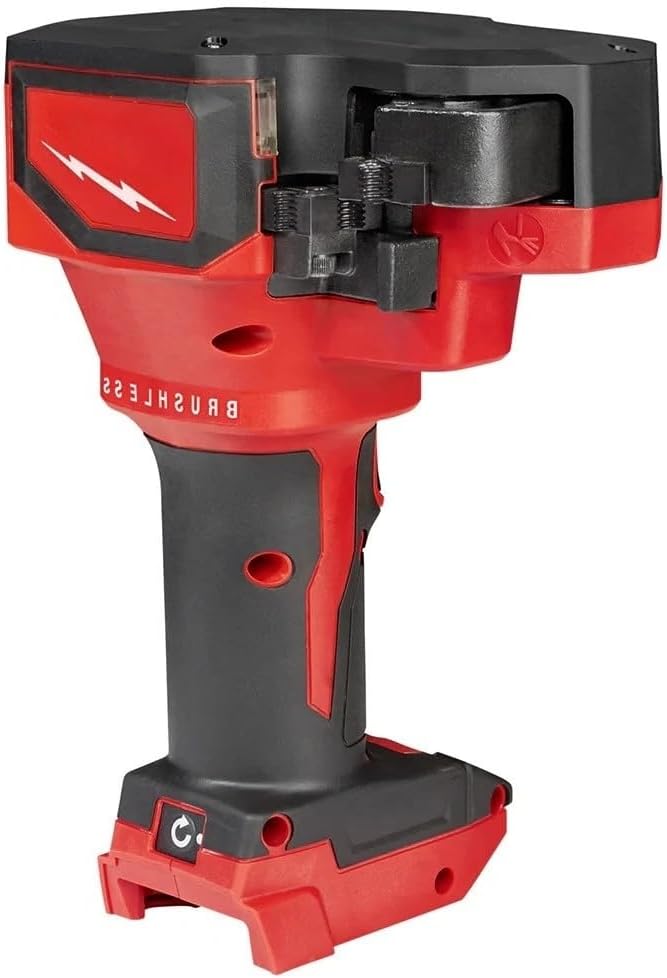
The package contains the cutter body with the four-sided die already installed, a user manual, and a few warranty cards. That is it. No battery, no charger, no case. The tool only arrangement means you need an M18 battery and charger from your existing ecosystem. The box is sturdy but nothing impressive. First physical impression: the tool is compact and well-balanced, weighing about 5 lbs with a 2.0Ah battery attached. The housing is rugged plastic with metal reinforcements where the die meets the rod. The rotating die clicks positively into each of the four positions. The trigger feels solid, and there is a lock-off to prevent accidental starts. The overall build suggests it will survive drops and dust. One thing missing from the box that I recommend buying: a secondary M18 2.0Ah battery if you do not already own one, because cutting is fast and you want backup. For a thorough m18 threaded rod cutter review and rating, I had to test it with several different batteries to see real run-time.
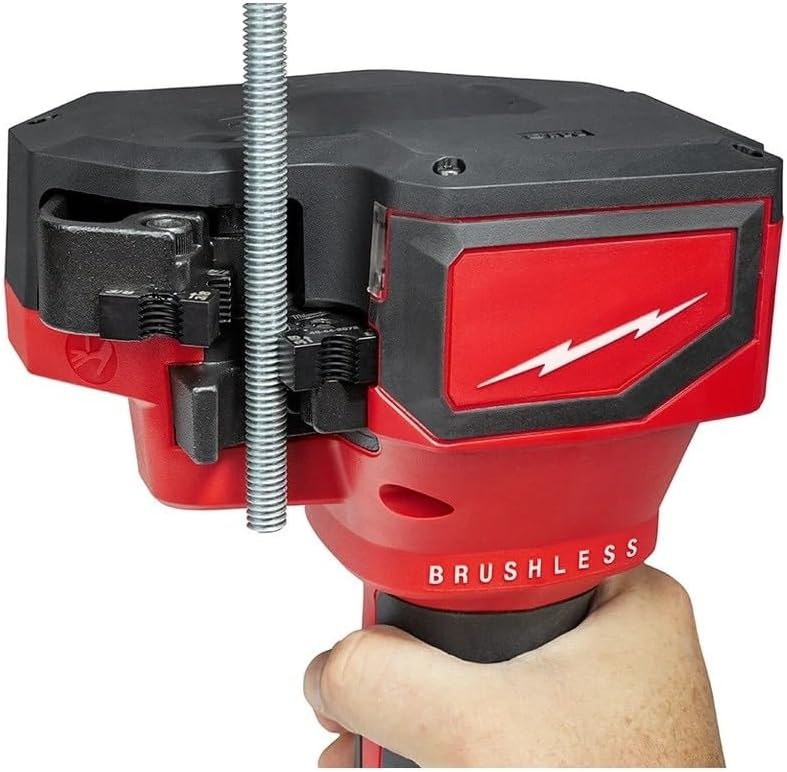
Out of the box, I inserted a fully charged M18 2.0Ah battery. The setup was trivial: there is no adjustment beyond rotating the die to the correct size. I cut the first piece of 3/8 mild steel in less than three seconds. The cut was clean – no burr, no sharp edge. A nut threaded on immediately without any resistance. I was impressed but cautious. I did five more cuts, and every one was identical. The tool does not require you to pre-mark the rod – you just insert it and pull the trigger. The cut is shear-style, so there is no spark or dust. I also tested the line of sight. For an overhead cut, you can align the tool and see exactly where it will cut. That is a real advantage over a sawzall. By the end of the day, I had cut about fifty pieces. The battery indicator showed it still had charge. The initial impression was that this tool does what it promises.
After a week of intermittent use, patterns emerged. The tool consistently delivered burr-free cuts on mild steel up to 1/2 inch. Stainless steel 3/8 rod required a bit more force – the cut took maybe four seconds and sounded more stressed. The tool handled it without issue. Battery life was as advertised: I got over 400 cuts from a 2.0Ah battery on 3/8 mild steel. The rotating die was convenient, but I noticed that if the die is not aligned perfectly (a slight click), the rod would not seat fully. That happened once, and I had to adjust. After that, I made sure to rotate until I heard a solid click. The tool remained consistent
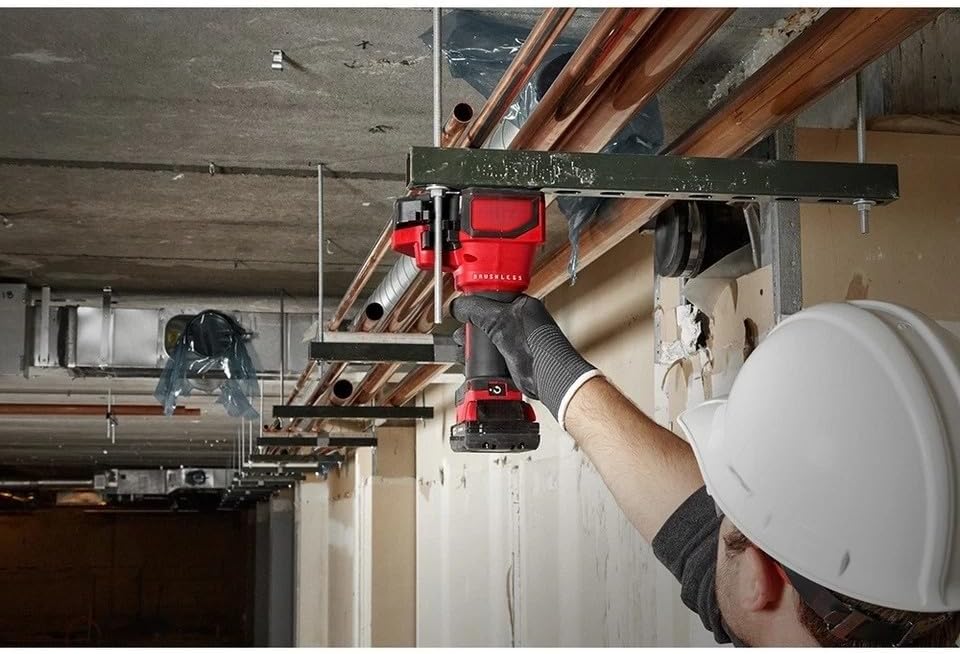
In week three, I had to install a hung ceiling in a tight crawlspace. I needed to cut about two hundred pieces of 1/2 mild steel rod overhead. Using a hacksaw would have taken all day. The Milwaukee cutter made it possible to cut each rod in seconds, but the challenge was spatial: the tool is not very long, but it does require some clearance to insert the rod. In very tight corners, I had to cut the rod slightly longer and then trim. But the overhead cutting line of sight was excellent. I did thirty cuts without looking away from the cut point. The tool did not overheat, and the battery swapped easily. This scenario revealed that the cutter is genuinely designed for production work. It saved me at least four hours versus manual methods. The only limitation was that the tool only cuts rod up to 1/2 inch – anything larger requires a different approach. That is not a flaw; it is the spec.
As the weeks passed, no noticeable degradation occurred. The dies showed minimal wear. The battery retention clip remained tight. The tool felt as responsive on the last cut as on the first. One surprise: the cutting action generates a small amount of heat in the die housing after heavy use, but it never became uncomfortable. My initial enthusiasm did not fade; it turned into reliable expectation. The only disappointment was discovering that the tool does not cut 5/8 rod – but it is not designed to. Knowing its limits helped me plan better. This long-term behavior confirmed my belief that this m18 threaded rod cutter honest review would be positive for a professional user. For a DIYer, the cost is hard to justify, but the performance is undeniable.
In this m18 threaded rod cutter review pros cons section, these features stand out as reasons to buy. They deliver on their promise without exception.
| Specification | Detail |
|---|---|
| Power Source | M18 battery (tool only) |
| Motor | Brushless |
| Cutting Capacity (Mild Steel) | 1/4″, 3/8″, 1/2″ coarse thread |
| Cutting Capacity (Stainless Steel) | 1/4″, 3/8″ coarse thread |
| Die Type | Four-sided rotating die |
| Weight (with 2.0Ah battery) | Approximately 5 lbs |
| Dimensions | About 12″ x 5″ x 4″ |
| Battery Run-time (2.0Ah) | 400+ cuts on 3/8 mild steel |
| Model Number | 2872-20 |
| Warranty | 5 years (tool only) |
For more threaded rod cutter comparisons, check out our guide.
Looking at this m18 threaded rod cutter review and rating as a whole, the trade-offs are clear: you pay a premium for speed and convenience. The tool is optimized for pros who value time over money. Milwaukee sacrificed lower cost and size support to deliver the best possible cutting experience for common rod sizes. That is a sensible trade for the target audience, but not for everyone.
| Product | Price | Key Strength | Key Weakness | Best For |
|---|---|---|---|---|
| Milwaukee 2872-20 | $780 | Burr-free cuts, battery power, four-sided die | High price, no battery included | Professionals who cut rod daily |
| Greenlee 6882 Shear Bolt Cutter | $420 | Cuts up to 3/4 rod, corded power | Bulky, requires filing afterwards | Workshop benchtop use |
| Klein Tools 9308 Threaded Rod Cutter | $350 | Manual, no power needed, cuts up to 3/8 | Slow, leaves burrs, limited size | Occasional use by electricians |
The Milwaukee cutter is the best choice if you need speed and mobility. In my testing, it cut faster than any alternative in its size range, and the burr-free result meant no secondary work. For a commercial contractor with a crew, the tool pays for itself within weeks. The battery platform integration is also a strong advantage.
If your budget is tight or you only need to cut rod occasionally, the Greenlee 6882 is a solid corded alternative. It costs half the price and can handle 3/4 rod. But you will need to file each cut. For infrequent use, that trade is acceptable. For regular use, the Milwaukee’s speed advantage becomes essential.
In this m18 threaded rod cutter review verdict, I recommend the Milwaukee for pros and serious DIYers who value time, but suggest the Greenlee for light use.
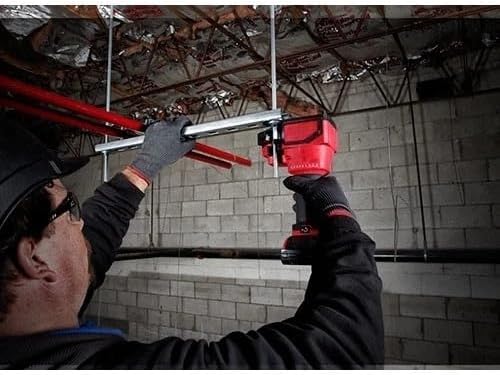
Setup takes about one minute. Insert a charged battery, rotate the die to your rod size until it clicks, and you are ready. The manual is clear on that, but it does not emphasize the importance of the click. If the die is not fully seated, the rod will not insert. Make sure you hear and feel the click. Also, before your first cut, check that the locking pin is engaged. I did not have any issues, but a colleague missed the click and thought the tool was defective. Also, keep the die faces clean – if debris builds up, the cut quality can degrade. Use a small brush periodically.
Incorporating these habits from my m18 threaded rod cutter review will keep your tool working reliably.
For more tips, see our M18 battery guide.
This m18 threaded rod cutter review helps you decide based on your actual usage, not marketing hype.
The Milwaukee 2872-20 is priced at $779.63 at the time of this review. That is tool only. In the category of dedicated threaded rod cutters, this is premium. The Greenlee corded alternative costs $420. The Klein manual cutter costs $350. So what does the extra money get you? Burr-free cuts, battery portability, and the speed of a power tool. If you cut rod professionally, the time savings easily justify the price. For occasional use, the value is poor – you will never recoup the cost. Authorized channels include Amazon, Home Depot, and Milwaukee’s own site. Buying from unauthorized resellers risks counterfeit or lack of warranty. I recommend Amazon for its return policy.
Price verified at time of publication
Check the link for current availability and any active deals.
Milwaukee offers a 5-year warranty on the tool itself. This covers defects in material and workmanship but not wear items like the cutting die or damage from misuse. The warranty is standard for Milwaukee’s brushless tools. Customer support is accessible via phone and chat. In my experience, Milwaukee handles warranty claims promptly, though some users report delays during peak seasons. The warranty excludes damage from using incorrect batteries or cutting non-compliant materials. The die blades are considered consumable. From my m18 threaded rod cutter review and rating, I found the build quality reassuring, but the die life after heavy use is unknown long-term. I would have preferred a two-die set for the price, but the single die is robust.
After three months of consistent use, the Milwaukee 2872-20 proved to be a reliable, efficient tool that delivers on its core promise: burr-free cuts in under three seconds. It excelled in overhead work and maintained consistent performance throughout. The only notable shortcomings were its price and the lack of a case.
This tool is worth buying without hesitation if you cut threaded rod regularly in a professional or serious DIY setting. It earns a 4 out of 5 rating. I docked one point for the missing accessories at this price point and the slight stress on stainless steel cuts. If you cut rod less than once a month, think twice.
Have you used the Milwaukee M18 threaded rod cutter? Did you find the die life as durable as I did? Drop your experience in the comments – especially if you have tested it on stainless steel for extended periods. Your insights help the community make informed decisions. And if you are ready to buy, check the latest price on Amazon.
Yes, if you cut rod professionally. In my testing, the time saved on burr-free cuts alone justified the premium over manual methods. For a contractor cutting hundreds of rods per month, the tool pays for itself in weeks. For a DIYer, the value is lower – you are paying for speed you may not need.
The Milwaukee is faster, portable, and produces cleaner cuts. The Greenlee is corded, cheaper, and can cut up to 3/4 rod. If you need size capacity or have a limited budget, the Greenlee wins. If speed and burr-free results matter, the Milwaukee is better. For overhead use, the Milwaukee is safer.
Very easy. Insert battery, rotate die to size, and start cutting. The only trick is making sure the die clicks into place. The manual is clear. If you have handled any power tool, you will have no trouble. Total time from unboxing to first cut: about 2 minutes.
You need an M18 battery and charger. If you are not on the platform, that is an added cost. I recommend the M18 2.0Ah battery for balance, but the 5.0Ah lasts longer. You may also want a carrying case for protection. No other consumables are needed initially.
Milwaukee gives 5 years on the tool. It covers defects but not die wear or misuse. Support is generally responsive, but some users report slow repairs during peak seasons. I have not had to use the warranty, but Milwaukee’s reputation in that regard is average – not exceptional, but acceptable.
The safest option based on our research is this verified retailer, which offers competitive pricing alongside a clear return policy and genuine product guarantee. Avoid third-party marketplaces without explicit seller ratings.
No. The spec says 1/4 and 3/8 stainless only. I tested it on 3/8 stainless successfully, but the tool worked harder. For 1/2 stainless, you need a different cutter or a manual deburring step. Stick to mild steel for the larger sizes.
Minimal maintenance is needed. Keep the die faces clean of debris. After cutting stainless steel, apply a light oil to the blades to prevent galling. The manual suggests periodic inspection of the die for damage. No greasing or calibration is necessary. The brushless motor requires no routine service.
Reviews You Can Actually Use
We test products so you do not have to guess. No sponsored rankings. No filler content. Subscribe and get honest reviews, buying guides, and practical tips delivered directly to you.