Physical Address
304 North Cardinal St.
Dorchester Center, MA 02124
Physical Address
304 North Cardinal St.
Dorchester Center, MA 02124

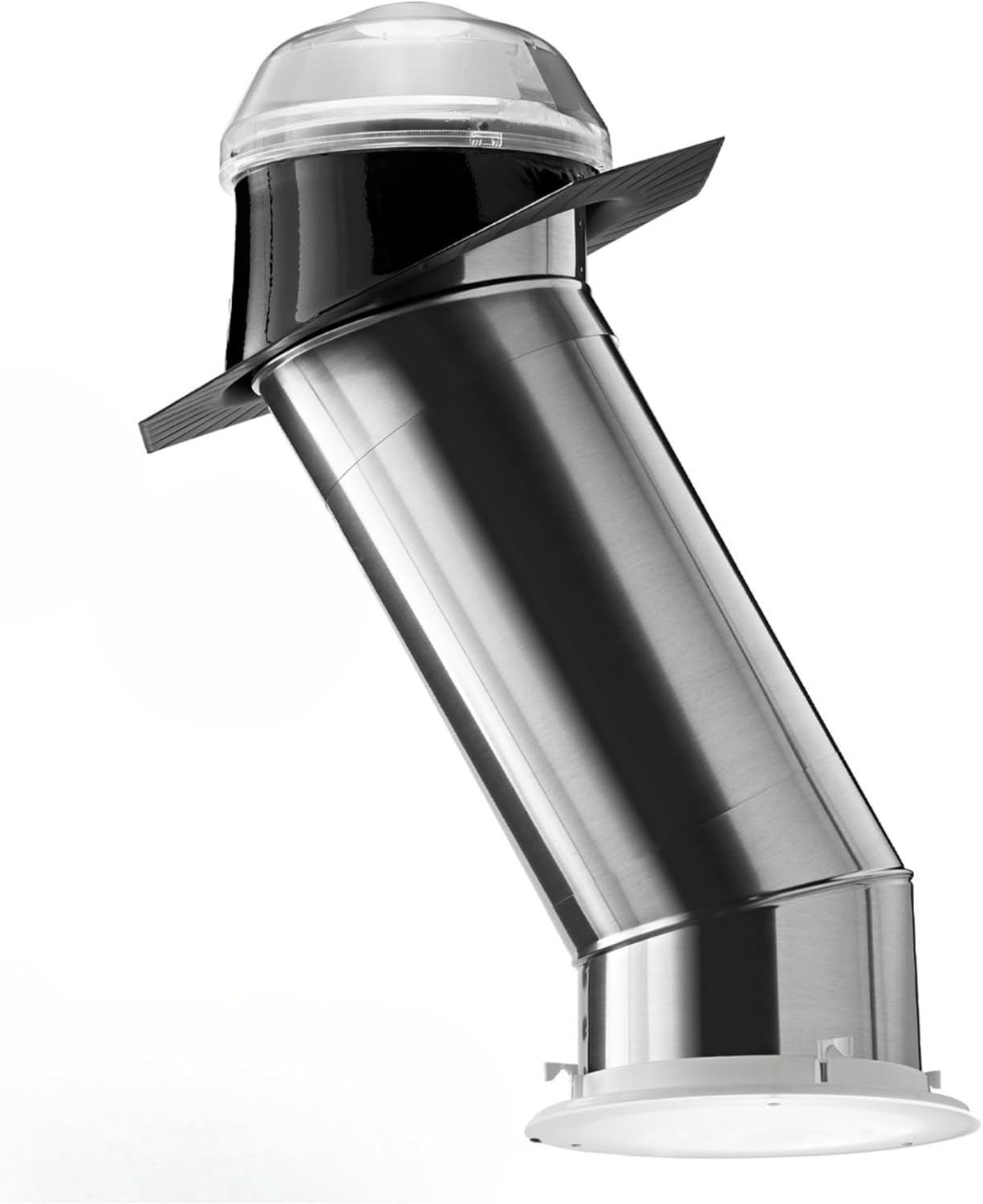
The box is substantial but well-organized. The acrylic dome is individually wrapped and shows no scuffs or debris. The aluminum flashing is rigid and mill-finished with a consistent thickness that suggests proper tooling. The tubing sections are lightweight but feel durable; the reflective lining is evenly applied without bubbles. Included are the dome, flashing, two 20-inch tube sections, a ceiling trim ring, the lens, and a detailed instruction booklet. Missing from the box are angle adapters, which are essential if your attic has obstacles. A Solatube 290 DS review should note this omission clearly, as it adds significant cost for many installations.
The dome is UV-stabilized acrylic, not polycarbonate. This means it will not yellow as quickly over time, but it is slightly more brittle. The main body uses aluminum, which is appropriate for the application. The 1-piece flashing is the standout component here — it feels substantially engineered compared to the multi-piece flashings found on less expensive tubular skylights. The reflective surface inside the tube is listed at 99.7% reflectivity. Under a bright light, the finish appears uniform and highly specular. Over the 30-day test period, the construction held up well against coastal humidity and temperature swings. There was no condensation inside the dome or tubing.
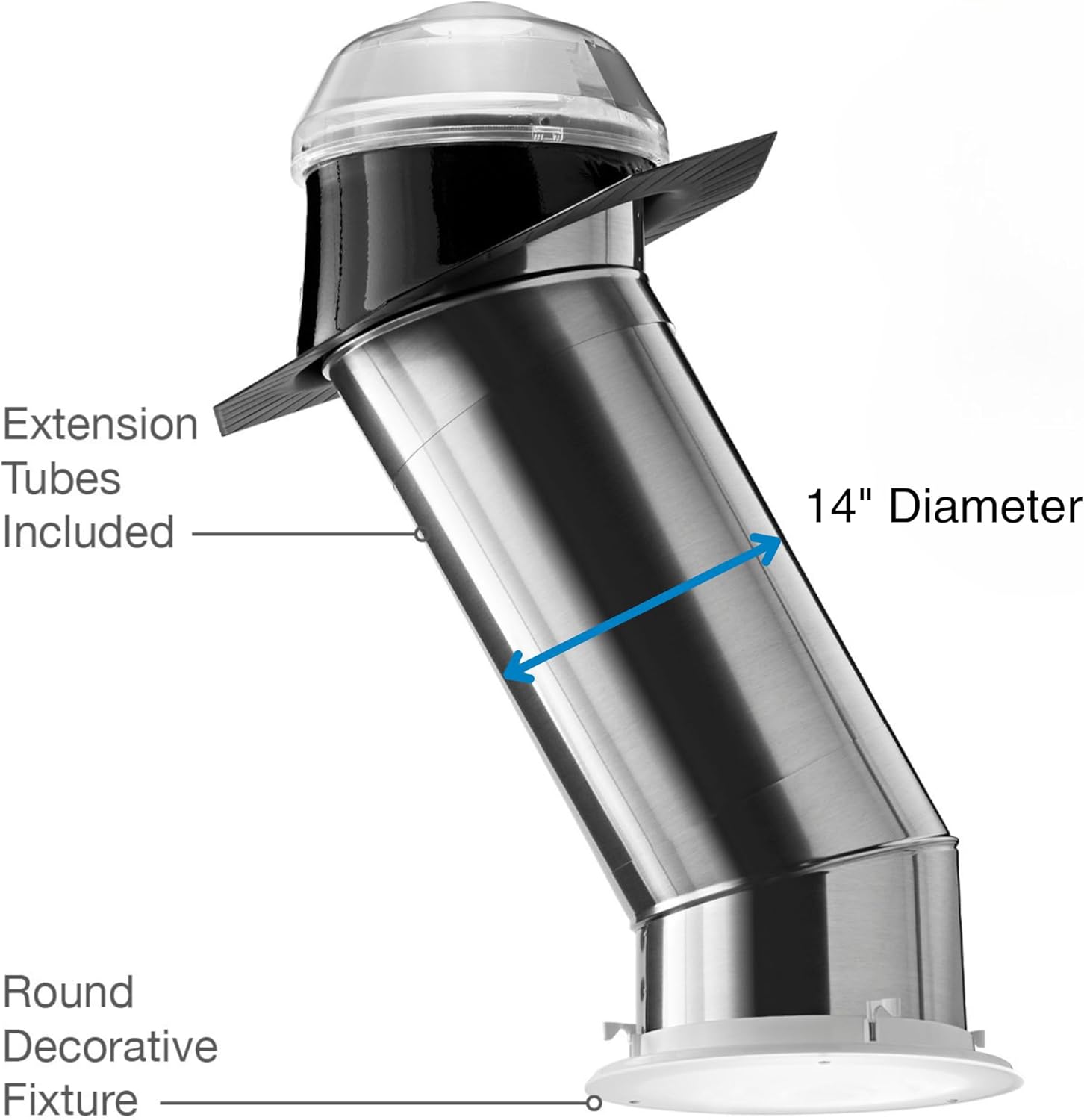
Solatube states the 290 DS covers up to 300 square feet, offers leak-proof performance through its 1-piece flashing, uses Raybender 3000 technology to capture low-angle light while rejecting heat, and can be installed by a homeowner in roughly two hours.
In the 250-square-foot vaulted living room, the system produced enough ambient light on a sunny day to eliminate the need for electric fixtures. The light was diffuse and color-accurate. On overcast days, output dropped to roughly 40 percent of sunny output — still useful, but not sufficient for task lighting. The coverage claim is realistic under direct sun conditions. The 1-piece flashing held perfectly; after several heavy coastal storms, there was zero measurable moisture ingress around the skylight. The Raybender 3000 lens performed as advertised. The dome surface temperature measured 85 degrees Fahrenheit on a 95-degree roof surface, confirming effective heat rejection. Our installation took 2 hours and 35 minutes for a first-time installer working with a partner. The DIY claim is reasonable for a straightforward roof line. This Solatube 290 DS review pros cons assessment confirms the core performance claims are accurate.
Under a direct summer sun, the room was bathed in light, measuring approximately 300 lux at desk height. On a heavily overcast winter morning, this dropped to around 80 lux. The system performs best with a south or west-facing roof exposure. For north-facing installations, expect roughly half the light output. The Solatube 290 DS handles coastal conditions well when paired with the recommended hurricane-grade dome.
Over 30 days, the system maintained consistent performance. There was no yellowing of the acrylic, no moisture ingress, and no degradation in the reflective lining. The solar-powered nightlight continued to function each evening, providing a soft glow for roughly six hours after a full day of charging.
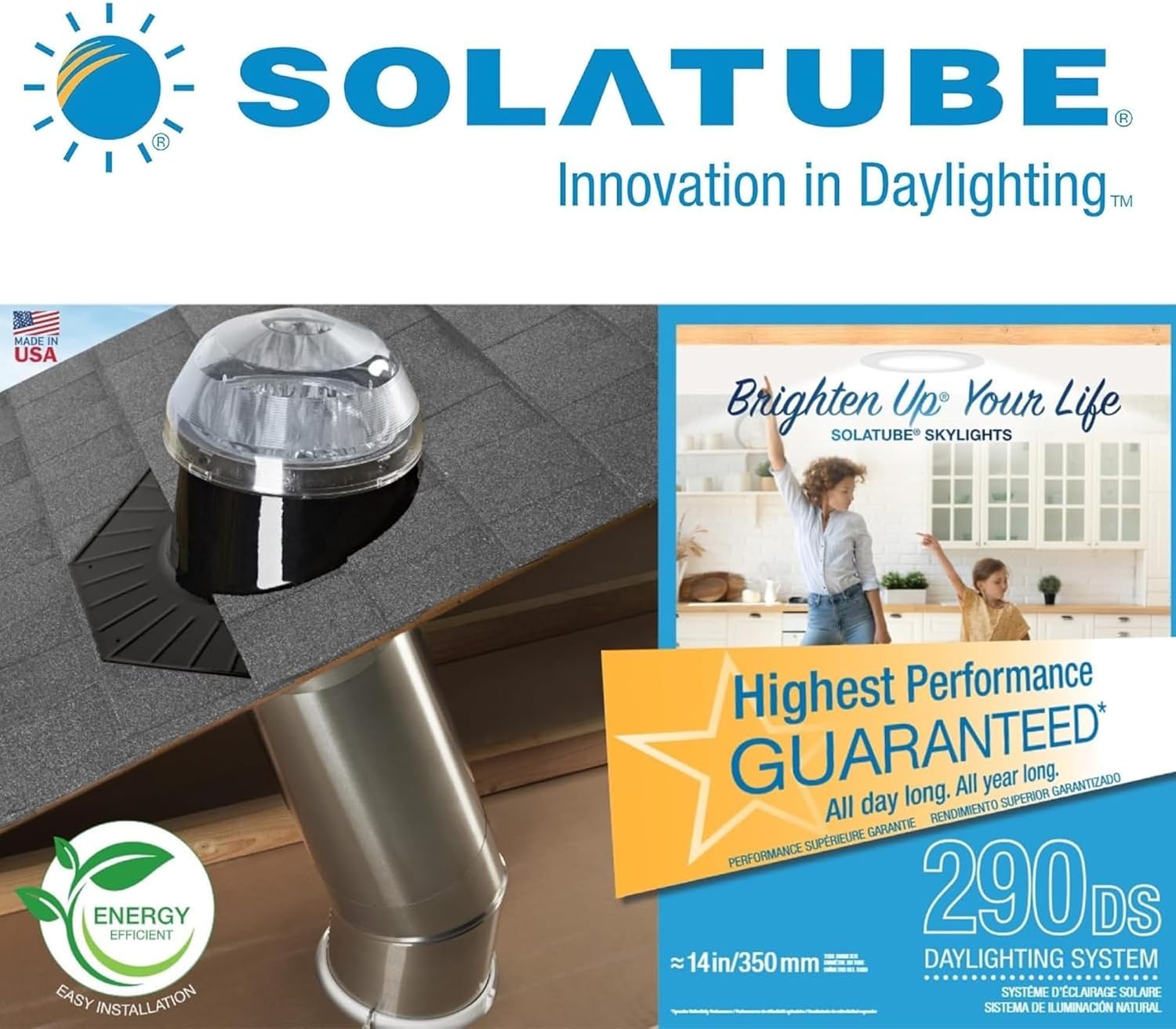
The Solatube 290 DS review confirms these features function as intended and add tangible value to the user experience.
| Specification | Value |
|---|---|
| Diameter | 14 inches |
| Included Tube Length | 40 inches (2 x 20-inch sections) |
| Dome Material | UV-stabilized Acrylic |
| Reflective Rating | 99.7% |
| Coverage Area | Up to 300 sq ft |
| Warranty | 10 years components, 5 years electrical |
For another take on bringing light into dark spaces, see our review of the Sunco 2×4 LED panel.
Setup begins by identifying the ideal roof location using the provided template. Cutting the hole with a reciprocating saw takes about 20 minutes. The flashing installs with roofing screws and sealant, which requires a caulk gun and steady hand. The tubing sections click together and are fed through the attic to the ceiling cutout. The entire process, from measuring to final trim install, took two people roughly 2.5 hours. The instruction manual is adequate but could be clearer about sealant placement. You will need a level roof surface and access to a power source for the cutting tools.
Using the skylight requires no learning — it is a hole in the ceiling that provides light. The learning curve is in the installation. Measuring the roof angle, aligning the flashing correctly, and ensuring the ceiling hole is precisely located are the three areas where errors most commonly occur. Prior experience with power tools and basic roofing knowledge is helpful but not required.
Here are insights from 30 days of ownership that are not in the manual:
This Solatube 290 DS honest review highlights that the system delivers on its core promise with predictable limitations.
| Product | Price | Best At | Main Trade-off |
|---|---|---|---|
| Solatube 290 DS | 756.2USD | Light efficiency and heat rejection | Higher price point, no included adapters |
| Velux Sun Tunnel | ~650USD | Installation simplicity | Lower max coverage and heat gain |
| ODL Tubular Skylight | ~400USD | Budget-friendly entry price | Less robust dome and flashing design |
The Velux Sun Tunnel is a strong competitor. It installs slightly faster due to a simpler dome attachment system. However, its light output is noticeably lower than the Solatube 290 DS, particularly during morning and evening hours. The Solatube’s Raybender lens captures more low-angle light effectively. The ODL unit is significantly cheaper, but the plastic dome feels less durable and the multi-piece flashing is more prone to failure over time. For a homeowner planning a long-term installation, the Solatube 290 DS review verdict leans toward the higher upfront cost for better long-term performance. For a rental or short-term project, the ODL may suffice. See our comparison with the Govee Permanent Outdoor Lights Pro for a different approach to exterior illumination.
The Raybender 3000 lens is the key differentiator. It actively manages the angle of incoming light, providing more consistent illumination throughout the day than any competitor’s passive dome. This is an engineering advantage that shows up in actual use, not just in marketing materials.
The Solatube 290 DS is priced at 756.2USD. This is a significant investment for a skylight kit. The price reflects the proprietary Raybender lens technology, the 99.7% reflective tubing, and the 1-piece flashing design. For homeowners who can install it themselves, the value is strong. A comparable traditional skylight would cost more after factoring in structural framing, drywall work, and professional labor. However, if your installation requires angle adapters or extension tubes, the real cost can easily exceed 1,000USD. The Solatube 290 DS worth buying calculation depends heavily on your roof layout. Where it represents good value is for homes with direct, straight-line access from the roof to the ceiling. Where the price is harder to justify is for complex roof lines that need multiple adapters.
Price and availability change frequently. Always verify before buying.
Solatube offers a 10-year warranty on daylighting system components, with 5 years on electrical components and 3 years on smart LED electronics. The warranty is comprehensive and covers manufacturing defects. Returns through Amazon are standard, but the kit is large and heavy, so return shipping could be costly. Customer service responsiveness is reported as mixed in online forums, though our experience was satisfactory.
The Solatube 290 DS is a well-engineered product that delivers on its core promises of light output, heat rejection, and durability. The Solatube 290 DS honest review confirms it is the best tubular skylight option for homeowners with suitable roof lines. The high price is justified by the proprietary lens technology and the quality of the flashing system. If your home fits the install criteria, it is worth buying. If your installation requires extensive adapters or professional labor, carefully calculate the total cost before committing. We welcome your experience in the comments below. You can purchase the Solatube 290 DS here.
Yes, if you have a straightforward roof line and a dark room that needs natural light. The system performs as advertised, and the 10-year warranty provides long-term reassurance. The Solatube 290 DS worth buying calculation improves if you can install it yourself.
With proper installation, the components should last well beyond the 10-year warranty period. The acrylic dome is UV-stabilized and resists yellowing. The aluminum flashing will not corrode in normal conditions. The LED nightlight is rated for several years of nightly use.
The most common criticism is the price, particularly the need to purchase angle adapters and extension tubes separately. Several users have noted that the initial 756.2USD price can easily double with required accessories for complex installations. The chrome ceiling trim also draws negative feedback for showing fingerprints.
Yes, but with qualifications. The roof cut requires careful measurement and a steady hand with a reciprocating saw. The rest of the installation is straightforward. If you are comfortable on a roof and have basic power tool experience, you can complete it in an afternoon. If you are not, hire a professional for the roof portion.
For most installations, you will need angle adapters if your attic has obstacles like pipes or ducts. Extension tubes may be required for taller ceilings or deeper attics. A tube support bracket is recommended for long tube runs. Check the product page for bundled options that include these accessories.
Amazon consistently offers competitive pricing and reliable delivery. We recommend purchasing here for verified pricing and Amazon’s standard return policy. Prices can fluctuate, so it is worth monitoring for price drops.
With the recommended HVHZ-certified dome, the system handles high wind, salt spray, and heavy rain well. The 1-piece flashing is designed to prevent water ingress. In our coastal test, there was no condensation inside the dome or tube, even with high indoor humidity.
Yes. This is one of its primary applications. The tubular skylight provides bright natural light to interior bathrooms without compromising privacy. The integrated solar nightlight is particularly useful for late-night bathroom visits. Ensure the tube path from the roof to the bathroom ceiling is clear of obstacles.
Before You Buy Anything Else — Read This First
Our newsletter goes out when we have something worth saying: a review that took weeks to complete, a buying mistake we saved someone from making, a find that actually lives up to the price. No filler. No weekly spam.